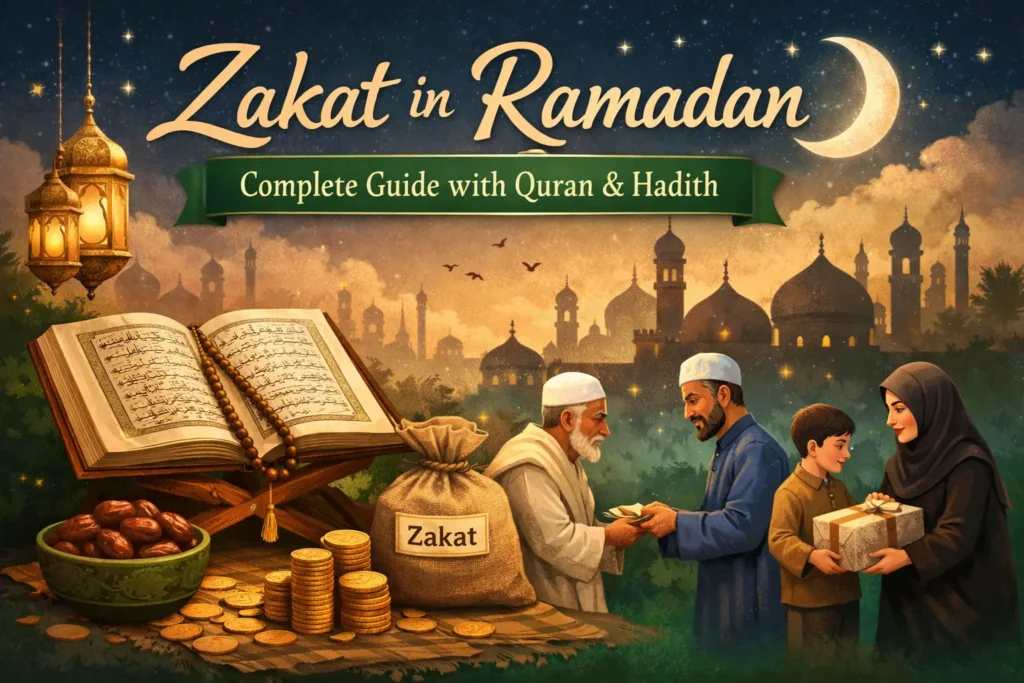
Ramadan is not only a month for the purification of the soul, but also a month for the purification of wealth and generosity. It is the month in which a person endures hunger throughout the day, cultivating empathy and a deeper awareness of those who face poverty and hardship year-round. This feeling of empathy softens the heart and encourages believers to help those in need.
Zakat is an obligatory charity that becomes due once a full lunar year has passed over one’s qualifying wealth. However, many Muslims prefer to give their Zakat in Ramadan because of the blessings and spiritual atmosphere of this sacred month. When given correctly and sincerely, Zakat not only transforms the life of the poor but also purifies the wealth and heart of the giver.
In this comprehensive guide, we will clearly explain the rules of Zakat and address whether it is necessary to give Zakat only in Ramadan, whether there is additional reward for doing so, and what the Qur’an and authentic Hadith say about it.
Importance of Zakat in Islam
Zakat is an obligatory form of charity that becomes mandatory upon every Muslim who meets the required threshold of wealth (nisab) and has possessed it for one full lunar year. The word Zakat literally means purification and growth. It purifies a person’s wealth from greed and selfishness while increasing its blessings (barakah).
Allah commands in the Qur’an:
“And establish prayer and give Zakat…”
(Surah Al-Baqarah 2:43)
This verse shows that Zakat is repeatedly mentioned alongside Salah (prayer), highlighting its great importance in Islam.
The Prophet ﷺ said:
“Charity does not decrease wealth.”
(Sahih Muslim, Hadith 2588)
Why Muslim Give Zakat in Ramadan?
Since Zakat is an obligatory charity that must be given immediately after a full lunar year has passed on the wealth, it is legally required to pay it on time. However, many Muslims delay giving Zakat until Ramadan because of:
1. Good Deeds are Multiplied in Ramadan
One of the greatest reasons Muslims choose to give Zakat in Ramadan is that good deeds are multiplied 70 times during this blessed month. The Prophet ﷺ was known for his extraordinary generosity, especially in Ramadan.
Ibn Abbas (RA) said:
“The Messenger of Allah ﷺwas the most generous of people, and he was even more generous in Ramadan…”
(Sahih Bukhari)
Scholars mention that good deeds in Ramadan carry multiplied reward, so giving Zakat in this blessed month increases spiritual benefit.
2. Zakat Purifies Fasting
Another major reason is that charity helps purify the fasting person. During Ramadan, Muslims strive to engage in righteous deeds throughout the day while observing their fast. Among the most virtuous of these deeds is giving charity — whether voluntary Sadaqah or obligatory Zakat — to support those who are in need.
3. Needs of People Increase during Ramadan
It is also preferable to give charity in Ramadan because the needs of many people increase during this month. Families require extra food for Suhoor and Iftar, and those who are already struggling may find it even more difficult to manage their daily expenses.
For this reason, Muslims try to give Zakat and Sadaqah in Ramadan so that the poor and needy can eat properly, observe their fast with ease, and break their fast with dignity.
Zakat Rules in Ramadan
The rules of Zakat remain the same throughout the year. There is no special condition that makes Zakat different in Ramadan. Whether you give it in Ramadan or any other month, the rulings and requirements remain exactly the same. Therefore, understanding the basic rules of Zakat in Islam is essential before paying it, so that this important act of worship is fulfilled correctly and accepted by Allah.
Here are a few important rules every Muslim must know about Zakat:
1. Who Must Pay Zakat?
Zakat is only mandatory upon a person who fulfills the specific conditions set by Islam. It is not required from every individual automatically, but only from those who meet the necessary criteria.
Zakat is Fard (obligatory) upon:
- A Muslim
- An adult (according to the majority of scholars; some schools also require it on a minor’s wealth if it reaches nisab)
- A sane person
- Someone who owns wealth equal to or above the Nisab threshold
- Someone who has possessed that wealth for one full lunar year (hawl), except in certain cases like agricultural produce.
2. What is Nisab?
Nisab is the minimum amount of wealth set in Islam that makes Zakat obligatory upon a person. If someone owns wealth equal to or above this threshold — after covering their basic needs and essential expenses — then Zakat becomes compulsory upon them.
It is based on:
- 87.48 grams of gold
or
- 612.36 grams of silver
or
- Or Cash equal to their amount
A person who owns wealth at or above this minimum threshold is known as Sahib-e-Nisab. If a person’s wealth reaches Nisab and remains for one lunar year, Zakat becomes obligatory at 2.5%.
3. Zakat Calculation in Ramadan
The most simple method to calculate zalkat is:
Step 1: Add All Zakatable Assets
- Cash in hand and bank
- Gold and silver (market value)
- Business inventory
- Investment profits
- Money owed to you (if likely to be repaid)
Step 2: Subtract Immediate Liabilities
- Debts payable immediately
- Bills due
Step 3: Calculate 2.5%
If your total wealth after deductions equals or exceeds Nisab:
Zakat = Total wealth × 2.5%
For example:
If total zakatable wealth = 1,000,000 PKR
Zakat = 1,000,000 × 2.5% = 25,000 PKR
This is your obligatory Zakat.
How to Pay Zakat in Ramzan Properly?
Zakat is a very great and powerful act of worship, but even a small mistake or negligence in it can affect its purpose and reduce its reward. Since Zakat is both a financial obligation and a spiritual duty, it must be given with proper knowledge, sincerity, and care.
If you are wondering how to pay Zakat in Ramzan properly, follow these Islamic guidelines:
1. Intention (Niyyah)
Zakat requires intention in the heart. You must intend that this payment is Zakat.
2. Give to Eligible Recipients Only
Allah clearly defines recipients in Surah At-Tawbah (9:60):
Zakat can be given to:
- The poor (Fuqara)
- The needy (Masakeen)
- Those in debt
- Zakat administrators
- New Muslims needing support
- Slaves seeking freedom
- In the path of Allah
- Stranded travelers
Scholars like Imam Abu Hanifa emphasized that Zakat must be transferred in ownership to a deserving person — it cannot be used for building mosques or general charity projects.
3. Give Privately and Respectfully
The Qur’an says:
“If you give charity openly, it is good; but if you conceal it and give it to the poor, it is better for you.”
— (Surah Al-Baqarah 2:271)
4. Do Not Delay Without Reason
Once Zakat becomes due, delaying without valid excuse is sinful.
Final Thoughts
Zakat in Ramadan is more than an obligation — it is a heartfelt expression of faith, gratitude, and compassion. When a believer parts with a portion of their wealth for the sake of Allah, they are not losing anything; they are gaining purity, barakah, and closeness to their Lord. In a month where hearts are already softened by fasting and prayer, giving Zakat becomes a beautiful reminder that our blessings are a trust from Allah. May every coin given in sincerity become light in our graves, relief on the Day of Judgment, and a means of mercy in this world and the Hereafter.
FAQs
1. Who is eligible to pay Zakat in Ramzan?
Any adult Muslim who:
- Owns wealth equal to or above Nisab
- Has possessed it for one lunar year
- Has no overwhelming debts reducing wealth below Nisab
Ramadan does not change eligibility — it only increases reward.
2. Is Zakat more rewarding in Ramadan?
Yes, voluntary charity has multiplied reward. For obligatory Zakat, scholars say reward increases due to the virtue of Ramadan — but obligation is not restricted to this month.
3. What is the difference between Zakat and Zakat al-Fitr?
Zakat al-Fitr is separate and mandatory on every Muslim before Eid prayer. It is not part of annual Zakat.
4. Can Zakat be given to relatives?
Yes, if they qualify as poor and you are not financially responsible for them (like parents or children).
5. What happens if someone does not pay Zakat?
It is a major sin. The Qur’an warns of severe punishment for withholding Zakat (Surah At-Tawbah 9:34–35).
6. Can I give Zakat before one year completes?
Most scholars allow early payment if there is a genuine need.